

Energy Lessons is one of those science topics students hear all the time, but don’t always fully understand. They know things move, lights turn on, and objects change — but why those things happen can feel fuzzy.
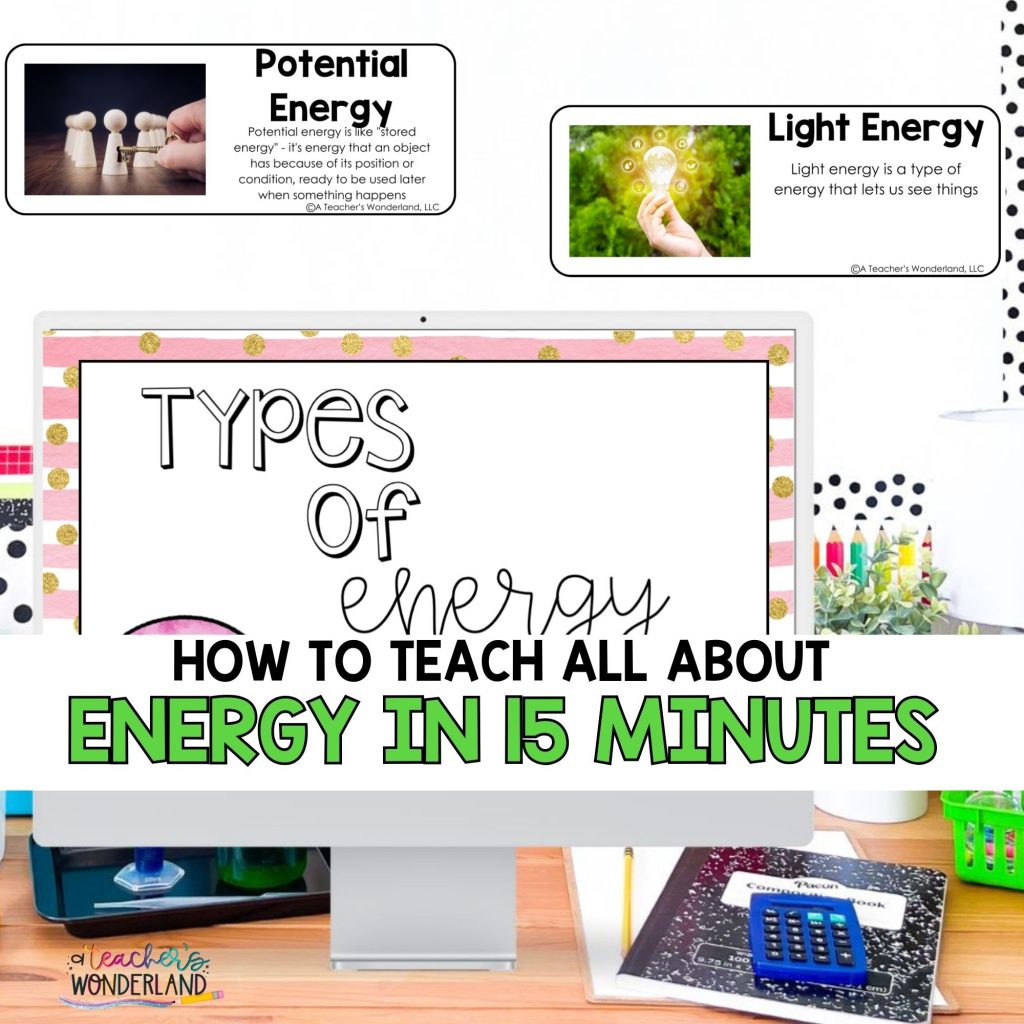
That’s why energy lessons work best when students can observe, discuss, and connect energy to real experiences instead of memorizing definitions. When energy becomes something they notice in their everyday world, understanding starts to click.
⏱️ Energy Lessons That Fit Real Classroom Schedules
Energy is a big idea, but it doesn’t require long, complicated lessons to teach it well. Short, focused instruction allows students to build understanding gradually without cognitive overload.
With a 15-minute science lesson structure, students are able to:
- Focus on one energy concept at a time
- Revisit ideas across multiple days
- Engage with visuals and guided notes
- Stay actively involved instead of passively listening
These energy lessons fit naturally into busy schedules while still giving the topic the depth it deserves.

🔋 How Students Build Energy Understanding Over Time
Instead of teaching energy as one big concept, this unit breaks it into manageable pieces that build on each other.
Across the unit, students explore ideas like:
- What energy is and how we use it every day
- Energy as the ability to cause motion or change
- Examples of energy they can observe around them
- How energy connects to movement, heat, and light
By revisiting energy in different contexts, students move beyond surface-level definitions and begin to recognize energy in real-world situations.

🔄 Independent Practice That Reinforces Energy Concepts
Once students have been introduced to energy ideas, independent practice helps solidify understanding.
🧠 Energy Sorts
Energy sorts allow students to classify examples based on how energy is being used. This encourages students to think critically about motion, light, and heat instead of guessing answers.
Sorting activities work well as:
- Independent centers
- Notebook activities
- Review stations
They help students practice decision-making while reinforcing vocabulary naturally.

✍️ Cross-Curricular Thinking: Writing About Energy
Energy lessons are a great opportunity to blend science and writing in a meaningful way. Short writing prompts encourage students to explain their thinking using science language.
Students might:
- Describe how energy causes movement
- Explain why energy is needed for change
- Connect energy use to real-life examples
Writing stays brief and purposeful, helping students organize ideas without turning science time into a long writing block. This approach supports comprehension while giving teachers quick insight into student understanding.

🧩 Hands-On Learning That Makes Energy Stick
Hands-on activities help students visualize energy concepts that can otherwise feel abstract. When students build, organize, or represent energy ideas visually, learning becomes more memorable.
These activities allow students to:
- Make connections between energy and everyday objects
- Show understanding through models or visuals
- Refer back to their work during discussion and review
Purposeful hands-on learning supports engagement while reinforcing key ideas from the energy lessons.
🔗 How It All Comes Together
When energy lessons include:
- Short, focused instruction
- Independent sorting and thinking tasks
- Writing that supports explanation
- Hands-on reinforcement
Students gain a clearer understanding of how energy works and why it matters. Learning feels connected instead of fragmented, and students are better prepared to apply these ideas in future science topics.
🚀 Bringing Energy Lessons to Life
Energy doesn’t have to feel abstract or overwhelming. With intentional structure and meaningful activities, students begin to recognize energy all around them — in motion, light, heat, and everyday experiences.
If you’re looking for energy lessons that are clear, engaging, and easy to fit into real classroom schedules, this approach helps students build understanding step by step while keeping science time manageable and meaningful.


