Lines, angles, and rays often feel like “easy geometry” until small groups reveal what students are really thinking. Many students can name terms, but struggle to explain them, identify them correctly, or apply them in diagrams.

Lines, Angles, and Rays small group instruction is where geometry concepts finally click because students can slow down, talk through what they see, and connect vocabulary to visuals.
Below are practical ways to teach lines, angles, and rays in 4th grade small groups, how to support common struggles, and how to do it without rebuilding the lesson every time you meet with a group 💛
What Students Commonly Struggle With in Geometry 🤔
During Lines, Angles, and Rays small groups, teachers often notice that students:
- Confuse lines, line segments, and rays
- Struggle to identify angles correctly
- Memorize vocabulary without understanding meaning
- Have difficulty explaining their thinking using precise math language
These issues usually come from limited exposure to visuals and not enough time to talk through the concepts.

How to Help Students With Lines, Angles, and Rays in Small Groups 🧠
Here are two effective teacher moves that support deeper understanding during small group instruction.
✅ Strategy 1: Anchor Vocabulary to Visuals
Before asking students to label or identify, make sure they understand what each term represents visually.
Have students:
- Trace examples of lines, rays, and line segments
- Point to endpoints and arrowheads
- Explain how each figure is different
💡 Teacher tip: Ask
“What makes this a ray and not a line segment?”
This reinforces meaning instead of memorization.
✅ Strategy 2: Require Students to Explain What They See
Encourage students to describe geometric figures using words before writing answers.
Use prompts like:
- “I know this is a ___ because ___.”
- “This figure has ___, so it must be a ___.”
This helps students slow down and use math vocabulary correctly.

Why I Created These Geometry Work Mats 📝
When I was teaching geometry in small groups, I noticed how much time I spent recreating visuals and explanations.
Each group needed:
- Clear diagrams
- Vocabulary support
- Space to explain thinking
And I found myself:
- Drawing figures on whiteboards
- Repeating definitions over and over
- Pulling multiple resources for the same concepts
I didn’t want to keep rebuilding the geometry lesson every time I met with a group.
I needed something that:
- Gave students clear visuals
- Reinforced vocabulary through practice
- Worked for reteach, practice, and intervention
- Let me focus on student thinking instead of setup
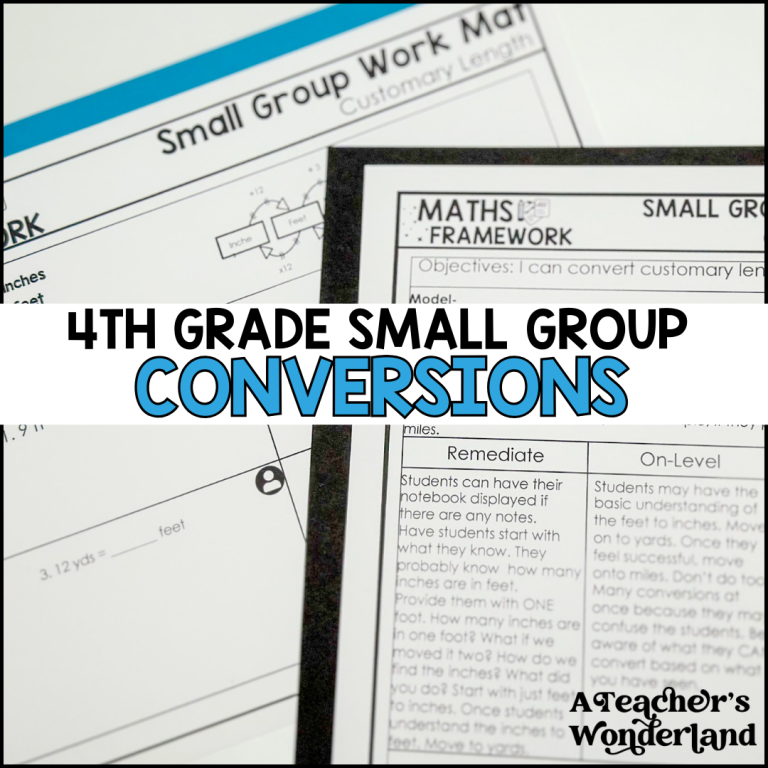
That’s why I created these lines, angles, and rays work mats.

How Geometry Work Mats Support These Strategies 🎯
The work mats are designed to match how geometry is taught in small groups.
They:
- Provide clear, student-friendly visuals
- Reinforce vocabulary through repeated exposure
- Include space for explanations
- Keep one geometry concept front and center
Everything students need is already on the mat, which keeps instruction focused and efficient.
What’s Included in the Lines, Angles, and Rays Work Mats 📄
This resource is designed specifically for 4th grade geometry small groups.
Students practice:
- Identifying and distinguishing lines, line segments, and rays
- Recognizing and naming angles
- Using correct math vocabulary
- Explaining geometric reasoning
Each mat includes:
- Clear geometric diagrams
- Guided prompts that support reasoning
- Space to label and explain
- A clean layout that reduces confusion
Because each mat targets a specific concept, it’s easy to choose exactly what your group needs.

How to Use Geometry Work Mats in Small Groups 🔄
These mats are designed to be print-and-go and flexible.
👩🏫 Teacher-Led Small Group
- Introduce the geometry concept using the mat
- Model how to identify and explain figures
- Have students complete the remaining tasks with support
🔁 Reteach or Intervention Groups
- Use one mat per session to keep instruction focused
- Emphasize vocabulary and explanation
- Collect the mat as a quick formative assessment
🤝 Independent or Partner Practice
- Use after small group instruction
- Assign during math rotations
- Pair students to encourage math talk
Why This Works (and Saves Time) ⏱️
Instead of recreating diagrams and vocabulary practice for every group, you can:
- Print the mat
- Teach the concept
- Use student work to guide next steps
The structure is already built in, which means less prep and clearer understanding.
If you’re looking for lines, angles, and rays small groups that are structured, supportive, and low-prep, these work mats were created to make teaching easier ✨